Just Rob Styles › Mid-Century Modern
Vermilion Speckle Cutout

A print/graphic AI art style prompt drawing on Mid-Century Modern and Poster Art. Copy the prompt below into any text-to-image model, then add your own subject at the end. The prompt only describes the look.
The blend
The prompt combines 3 ingredients and gives each one a job:
- Darwyn Cooke — Cooke's mid-century shape reduction creates forms built from clean-edged flat fills with no blended gradients.
- Tomer Hanuka — Hanuka's graphic shadow handling produces hard-edged cut-out value planes via a restricted vermilion, near-black, cream and umber palette.
- Screen print on warm toned stock — The print process infuses speckled ink grain and worn paper tooth.
The fusion manifests as stacked flat tones, sliver highlights on dark masses, and distressed speckle, transforming any subject through simplified poster-like shapes.
On 4 models
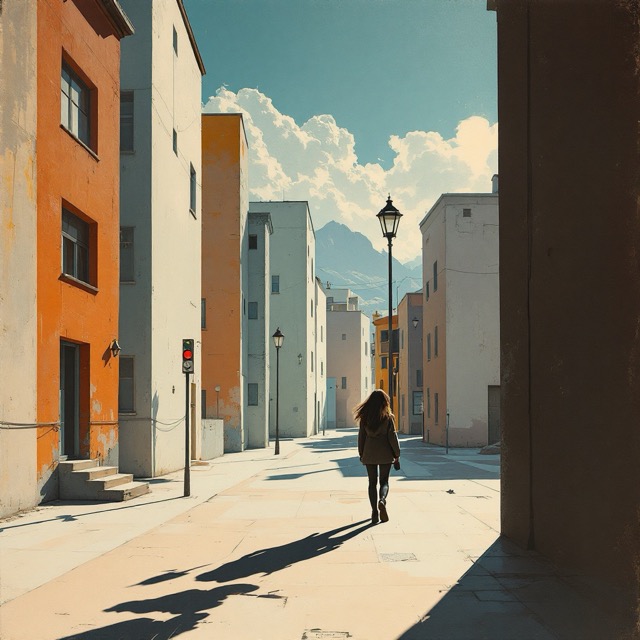
The same prompt and the same subject, rendered by different image models — so the differences are the model, not the prompt.


The prompt
Original
Darwyn Cooke + Tomer Hanuka + screen print on warm toned stock, where Cooke's mid-century shape reduction creates forms built from clean-edged flat fills with no blended gradients, and Hanuka's graphic shadow handling produces hard-edged cut-out value planes via a restricted vermilion, near-black, cream and umber palette, while the print process infuses speckled ink grain and worn paper tooth. The fusion manifests as stacked flat tones, sliver highlights on dark masses, and distressed speckle, transforming any subject through simplified poster-like shapes.
Render on BudgetPixel: FLUX 1.1 pro · GPT-Image-2 · Muse 1.0 · Nano Banana 2.1
Model-neutral
The same look with artist names and copyrighted references removed — for models that refuse them.
Mid-century cartoon and animation-style flat-shape illustration + contemporary graphic-novel cut-paper shadow design + screen print on warm toned stock, where shape reduction creates forms built from clean-edged flat fills with no blended gradients, and graphic shadow handling produces hard-edged cut-out value planes via a restricted vermilion, near-black, cream and umber palette, while the print process infuses speckled ink grain and worn paper tooth. The fusion manifests as stacked flat tones, sliver highlights on dark masses, and distressed speckle, transforming any subject through simplified poster-like shapes.
Render on BudgetPixel: FLUX 1.1 pro · GPT-Image-2 · Muse 1.0 · Nano Banana 2.1
Effect only
The recipe removed — no artists, no wild card, no movements. Only what the style does to a surface.
Every form is a clean-edged flat fill with no blended gradients. Shadows are single hard-edged shapes in one darker tone, stacked like cut paper. Thin sliver highlights run along dark masses. A few pigments, near-black and cream sit on a warm mid-tone ground, overlaid with fine speckled ink grain, scuffed wear and visible paper tooth.
Render on BudgetPixel: FLUX 1.1 pro · GPT-Image-2 · Muse 1.0 · Nano Banana 2.1
Using it
- Paste the prompt, then add your subject after it — for example …, a lighthouse on a cliff at dusk.
- The original names artists. Some hosted models refuse that or quietly render around it — on those, use the model-neutral version, which describes the same handling without the names.
- The effect-only version drops the recipe altogether and describes only what the style does to a surface. Use it to mix this look into another style, or when you want nothing traceable to a source.
- Every sample here was rendered against the same short subject — Quiet streets whisper / Her footsteps echo softly / Sunlight paints her path — so it shows the style, not a lucky subject.
Tags
Similar styles
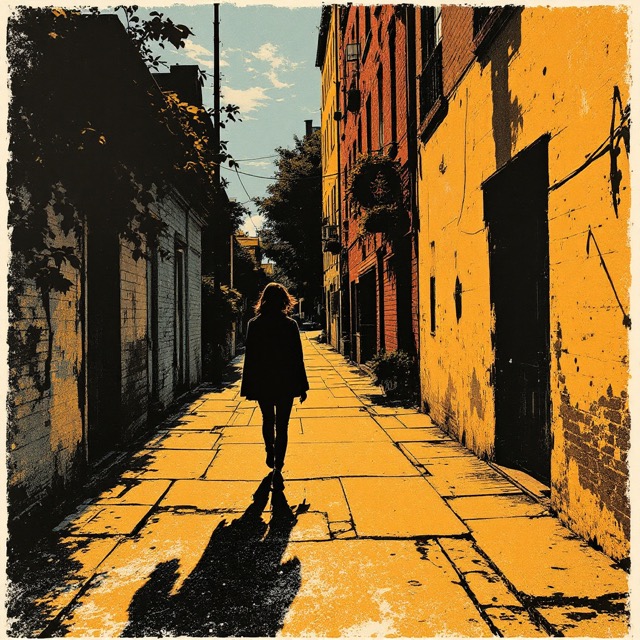 Oxblood Overprint GlowAlex Maleev + Kevin Tong + overprinted screen print on toned stock, where Maleev's photo-referenced noir inking creates…
 Matte Gouache Poster-GlossTomer Hanuka + Jean Giraud (Moebius) + gouache with airbrushed gradients on illustration board, where Hanuka's graphic…
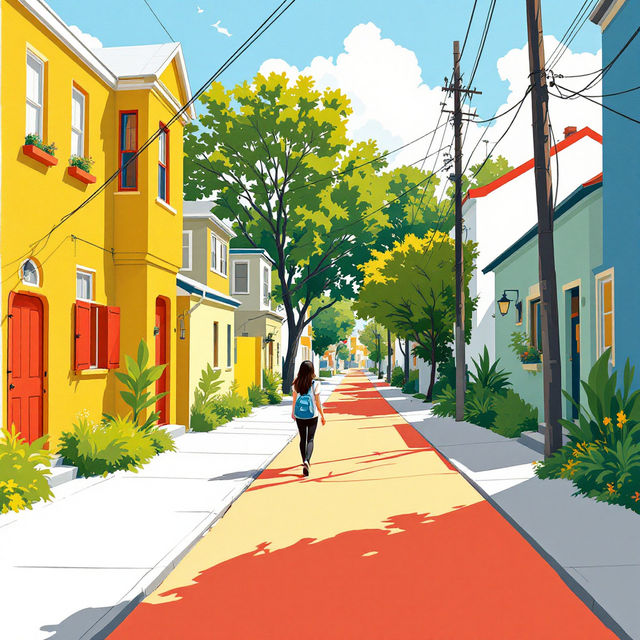 Shultz-BrownEconomical line work + cel painting, where the line work creates simplified silhouettes through minimal contour…
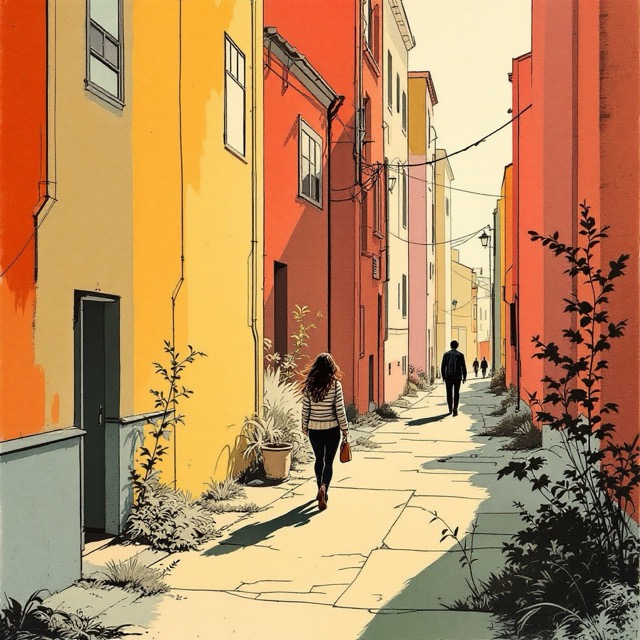 Rosewash Inked GouacheMoebius + Syd Mead + gouache and dip-pen ink on toned paper, where Moebius's fine even-weight ink contour with sparse…
 Floating-World PulpLurid, sun-faded palette — screaming reds, electric blues, acid yellows in flat unmodulated fields, warm artificial…
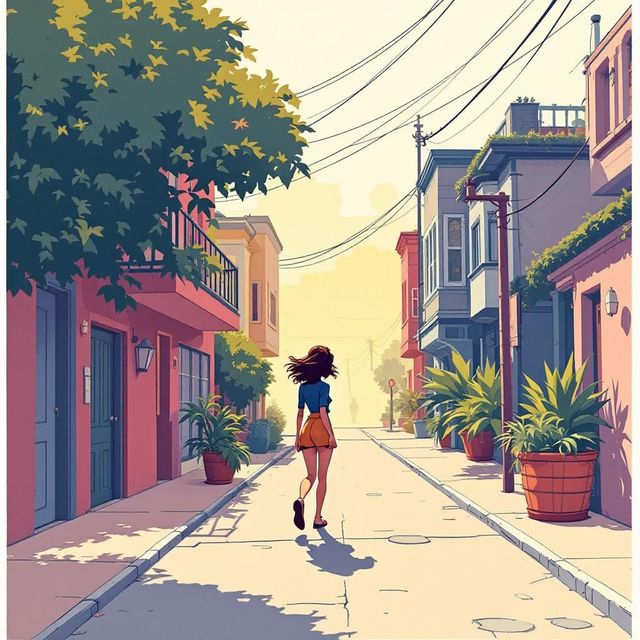 AmericanaCartoonDan DeCarlo + Darwyn Cooke, where DeCarlo's clean vector linework and simplified geometric forms create bold character…
 Glossy Dimensional IllustrationAlberto Vargas + Hajime Sorayama + Comic Book Colorist Technique, where Vargas's graduated airbrushed precision creates…
 Scuffed Gouache ChromeViktor Koretsky + Syd Mead + aged offset-lithograph poster print, where Koretsky's gouache poster handling creates flat…