Split-Channel Dot Screen
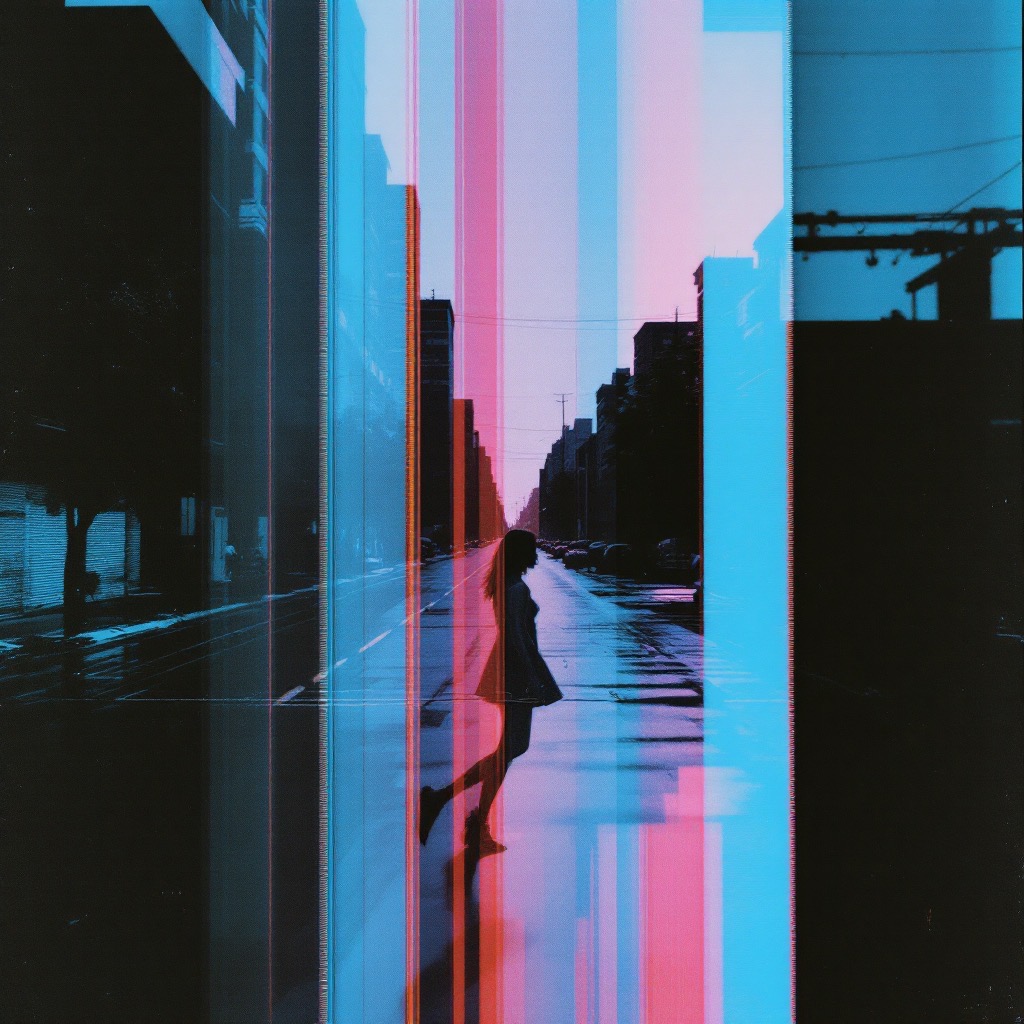
A print/graphic AI art style prompt drawing on Pop Art and Glitch Art. Copy the prompt below into any text-to-image model, then add your own subject at the end. The prompt only describes the look.
The blend
The prompt combines 3 ingredients and gives each one a job:
- Andy Warhol — Warhol's photo-silkscreen creates flat thresholded tonal masks through off-register ink layers on blocked colour fields.
- Ryoji Ikeda — Ikeda's data-grid austerity produces razor-thin parallel line and pixel-stripe lattices via strict 1-bit black and white quantisation.
- Cross-processed film photography — Cross-processed film infuses mismatched channel response with crushed shadows and curve-shifted highlights.
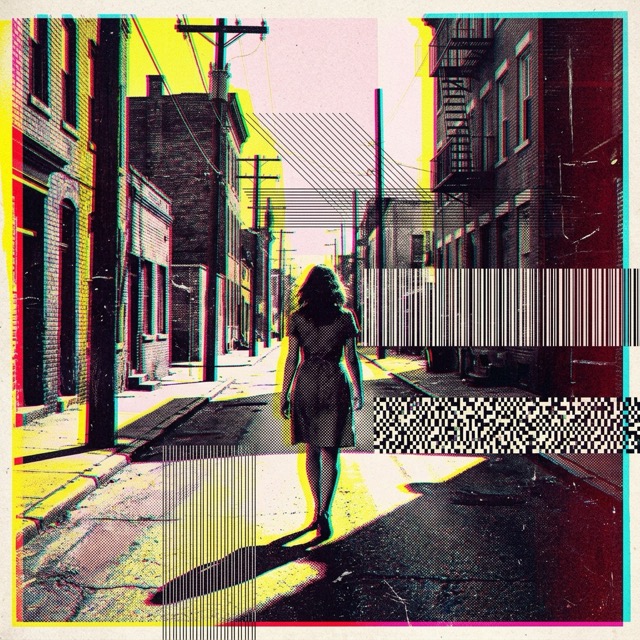
The fusion manifests as RGB channels shifted apart and inverted, coarse halftone dot screens beside barcode striping, and uneven ink density, transforming any subject through mechanical, physically printed handling.
On 4 models
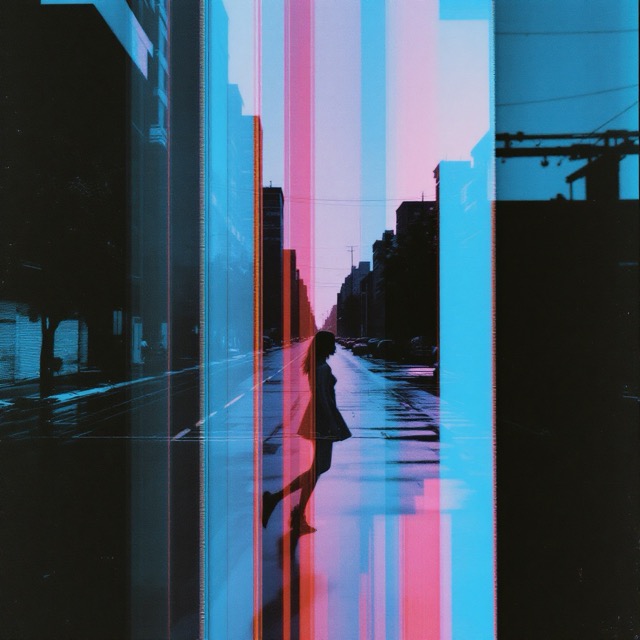
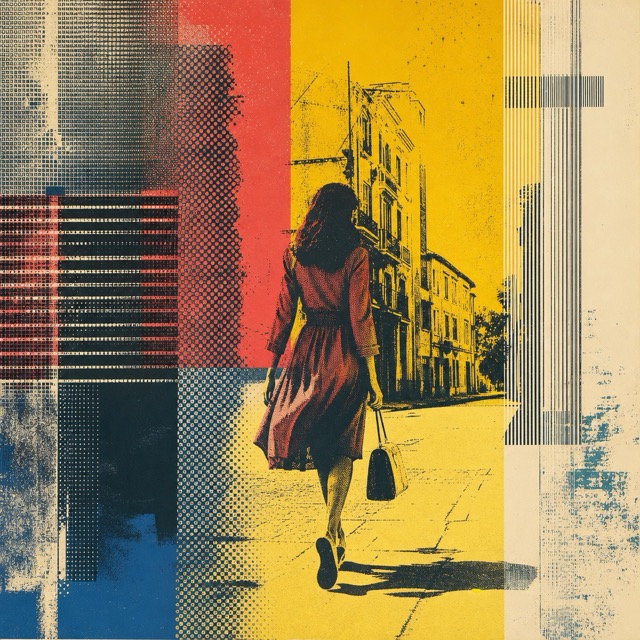
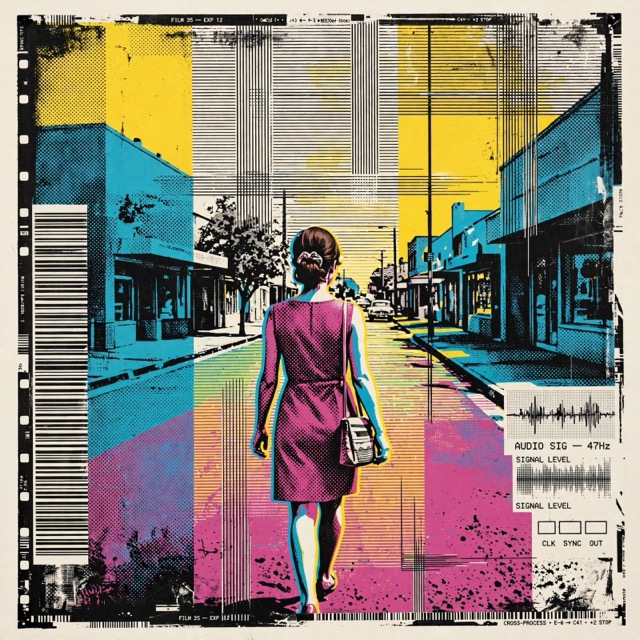
The same prompt and the same subject, rendered by different image models — so the differences are the model, not the prompt.
The prompt
Original
Andy Warhol + Ryoji Ikeda + cross-processed film photography, where Warhol's photo-silkscreen creates flat thresholded tonal masks through off-register ink layers on blocked colour fields, Ikeda's data-grid austerity produces razor-thin parallel line and pixel-stripe lattices via strict 1-bit black and white quantisation, and cross-processed film infuses mismatched channel response with crushed shadows and curve-shifted highlights. The fusion manifests as RGB channels shifted apart and inverted, coarse halftone dot screens beside barcode striping, and uneven ink density, transforming any subject through mechanical, physically printed handling.
Render on BudgetPixel: FLUX 1.1 pro · GPT-Image-2 · Muse 1.0 · Nano Banana 2.1
Model-neutral
The same look with artist names and copyrighted references removed — for models that refuse them.
1960s pop-art photo-silkscreen printing + minimalist data-art audiovisual installation + cross-processed film photography, where flat thresholded tonal masks create off-register ink layers on blocked colour fields, razor-thin parallel line and pixel-stripe lattices are produced via strict 1-bit black and white quantisation, and cross-processed film infuses mismatched channel response with crushed shadows and curve-shifted highlights. The fusion manifests as RGB channels shifted apart and inverted, coarse halftone dot screens beside barcode striping, and uneven ink density, transforming any subject through mechanical, physically printed handling.
Render on BudgetPixel: FLUX 1.1 pro · GPT-Image-2 · Muse 1.0 · Nano Banana 2.1
Effect only
The recipe removed — no artists, no wild card, no movements. Only what the style does to a surface.
Photographic tones collapse into flat, high-contrast ink masks printed slightly off register, with each colour channel shifted sideways and partly inverted so edges fringe in mismatched hues. Razor-thin parallel stripes and pixel lattices at pure black and white alternate with coarse halftone dots. Shadows crush, highlights tilt toward opposing hues, and ink density stays uneven, like a hand-pulled mechanical print.
Render on BudgetPixel: FLUX 1.1 pro · GPT-Image-2 · Muse 1.0 · Nano Banana 2.1
Using it
- Paste the prompt, then add your subject after it — for example …, a lighthouse on a cliff at dusk.
- The original names artists. Some hosted models refuse that or quietly render around it — on those, use the model-neutral version, which describes the same handling without the names.
- The effect-only version drops the recipe altogether and describes only what the style does to a surface. Use it to mix this look into another style, or when you want nothing traceable to a source.
- Every sample here was rendered against the same short subject — Quiet streets whisper / Her footsteps echo softly / Sunlight paints her path — so it shows the style, not a lucky subject.
Tags
Similar styles
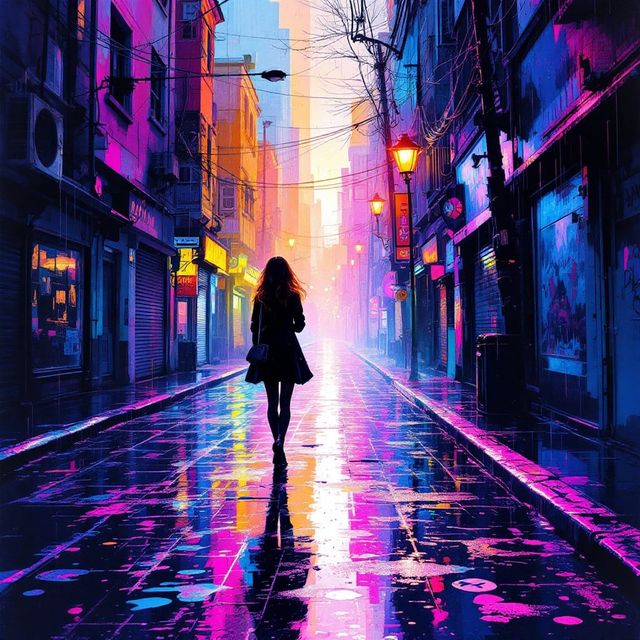 NeonWasha fusion of Pascale Campion's atmospheric urban romanticism + Kim Jung Gi's detailed ink lineart + street art…
 Solarized Zine PrintAndy Warhol + Robert Longo + Underground Zine Culture, where Warhol's screen printing mechanics create halftone dot…
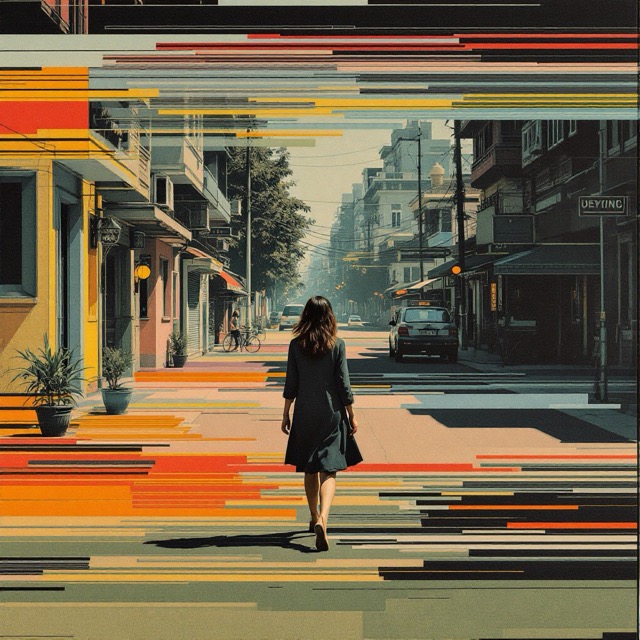 Seamed Enamel BandwidthJiří Kolář + Eugène Grasset + 1980s Doordarshan station ident cards, where Kolář's intercollage creates interwoven…
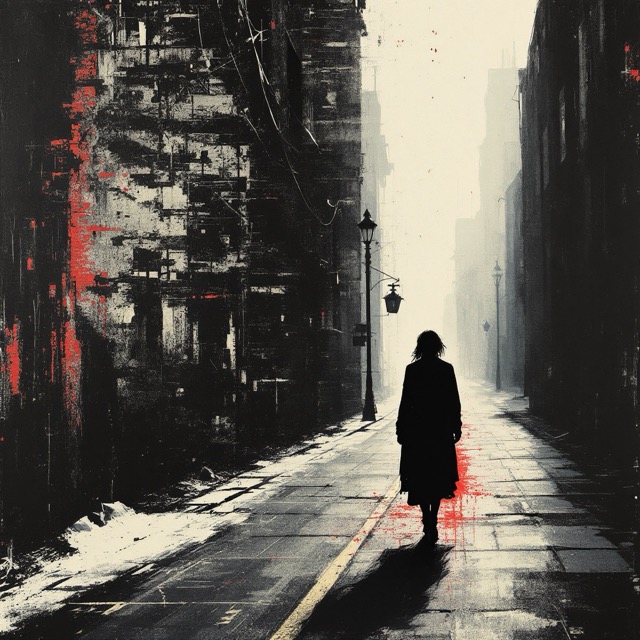 Smeared Toner StrataJacob Bannon + Francis Bacon + distressed photocopy-and-ink print texture, where Bannon's layered torn-paper collage…
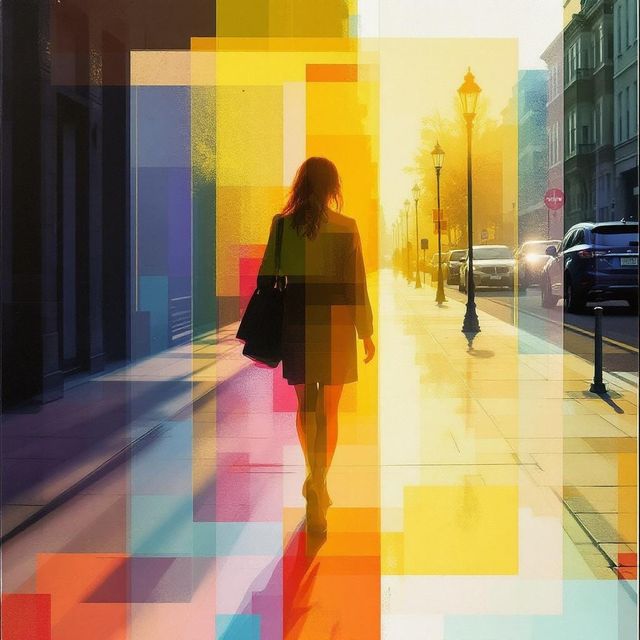 DynamicTranslucenceWassily Kandinsky + Helen Frankenthaler, where Kandinsky's layered transparent geometric forms create overlapping…
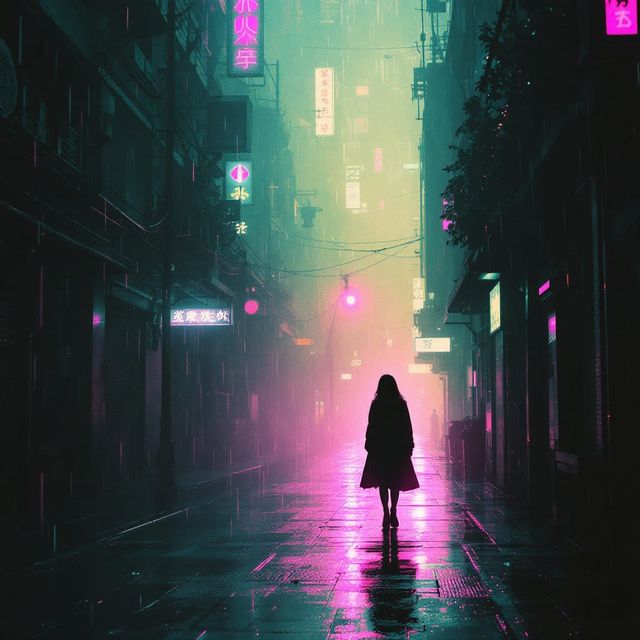 Neo-Edo NeonHokusai + Blade Runner cinematography + cyberpunk, where Hokusai's linear clarity creates flowing rhythm through…
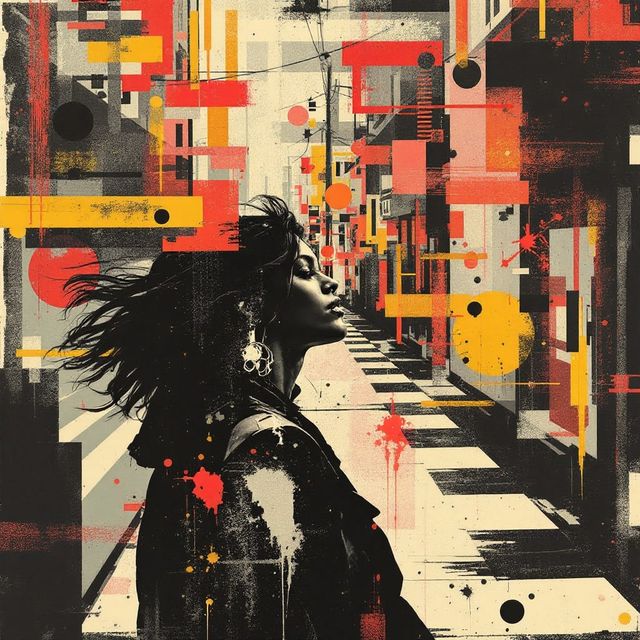 PopographA fusion of Shepard Fairey + David Carson + neo-pop collage where Fairey's high-contrast stencil technique creates bold…
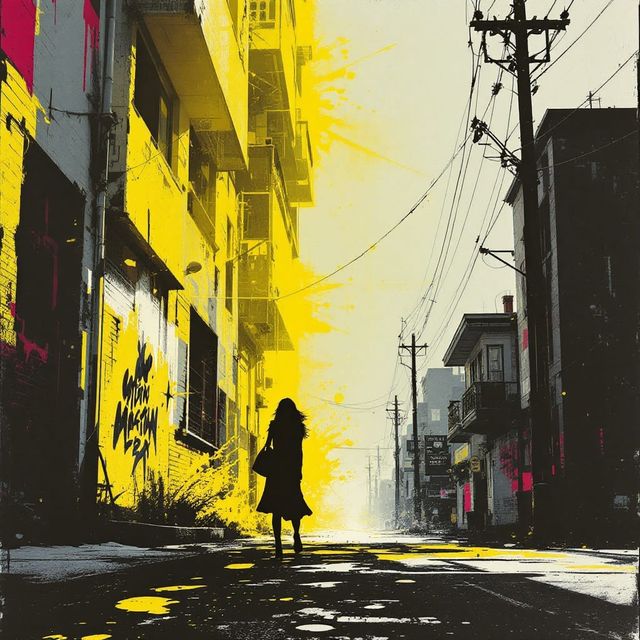 GritPulsea fusion of Raymond Pettibon + Cindy Sherman + Soviet constructivism where bold graphic elements intersect with harsh…