Fissured Prussian Print

A print/graphic AI art style prompt drawing on Street Art and Neo-Expressionism. Copy the prompt below into any text-to-image model, then add your own subject at the end. The prompt only describes the look.
The blend
The prompt combines 3 ingredients and gives each one a job:
- Shepard Fairey — Fairey's stencil-cut tonal separations create a single-hue value ramp with flat opaque accent fills.
- Anselm Kiefer — Kiefer's scarred craquelure produces fractured, scraped surfaces through dried pigment and exposed ground.
- Screen print on aged paper — The print process infuses ink crackle, paper tooth and slight misregistration.
The fusion manifests as translucent overlapping layers, fissured flat shapes and worn edges, transforming any subject through a restricted Prussian blue, cadmium red and cream palette.
On 4 models
The same prompt and the same subject, rendered by different image models — so the differences are the model, not the prompt.


The prompt
Original
Shepard Fairey + Anselm Kiefer + screen print on aged paper, where Fairey's stencil-cut tonal separations create a single-hue value ramp with flat opaque accent fills, Kiefer's scarred craquelure produces fractured, scraped surfaces through dried pigment and exposed ground, and the print process infuses ink crackle, paper tooth and slight misregistration. The fusion manifests as translucent overlapping layers, fissured flat shapes and worn edges, transforming any subject through a restricted Prussian blue, cadmium red and cream palette.
Render on BudgetPixel: FLUX 1.1 pro · GPT-Image-2 · Muse 1.0 · Nano Banana 2.1
Model-neutral
The same look with artist names and copyrighted references removed — for models that refuse them.
Contemporary street-poster stencil printmaking + German neo-expressionist scarred-surface painting + screen print on aged paper, where stencil-cut tonal separations create a single-hue value ramp with flat opaque accent fills, scarred craquelure produces fractured, scraped surfaces through dried pigment and exposed ground, and the print process infuses ink crackle, paper tooth and slight misregistration. The fusion manifests as translucent overlapping layers, fissured flat shapes and worn edges, transforming any subject through a restricted Prussian blue, cadmium red and cream palette.
Render on BudgetPixel: FLUX 1.1 pro · GPT-Image-2 · Muse 1.0 · Nano Banana 2.1
Effect only
The recipe removed — no artists, no wild card, no movements. Only what the style does to a surface.
A single blue hue stepped from deep shadow to pale highlight, with flat opaque red shapes laid over it. Every surface is fissured and scraped, with hairline cracks running through the ink and abraded patches exposing a cream, fibrous ground. Layers overlap translucently and sit slightly out of register. Edges are worn and broken, and the finish is matte, dry and grainy.
Render on BudgetPixel: FLUX 1.1 pro · GPT-Image-2 · Muse 1.0 · Nano Banana 2.1
Using it
- Paste the prompt, then add your subject after it — for example …, a lighthouse on a cliff at dusk.
- The original names artists. Some hosted models refuse that or quietly render around it — on those, use the model-neutral version, which describes the same handling without the names.
- The effect-only version drops the recipe altogether and describes only what the style does to a surface. Use it to mix this look into another style, or when you want nothing traceable to a source.
- Every sample here was rendered against the same short subject — Quiet streets whisper / Her footsteps echo softly / Sunlight paints her path — so it shows the style, not a lucky subject.
Tags
Similar styles
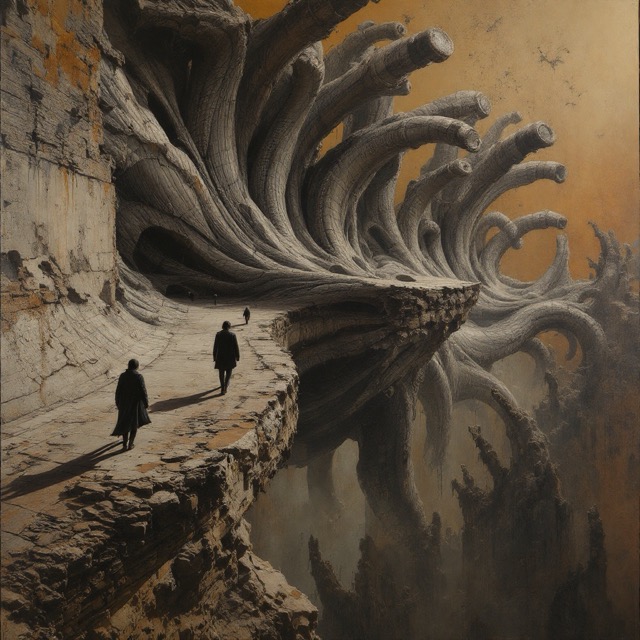 Corroded Bronze AirbrushH.R. Giger + Zdzisław Beksiński, where Giger's airbrushed gradient modelling creates glossy, hard-edged relief of…
 EtherealStreetAudrey Kawasaki + Banksy, where Kawasaki's delicate linework with ethereal rendering creates graceful elegance that…
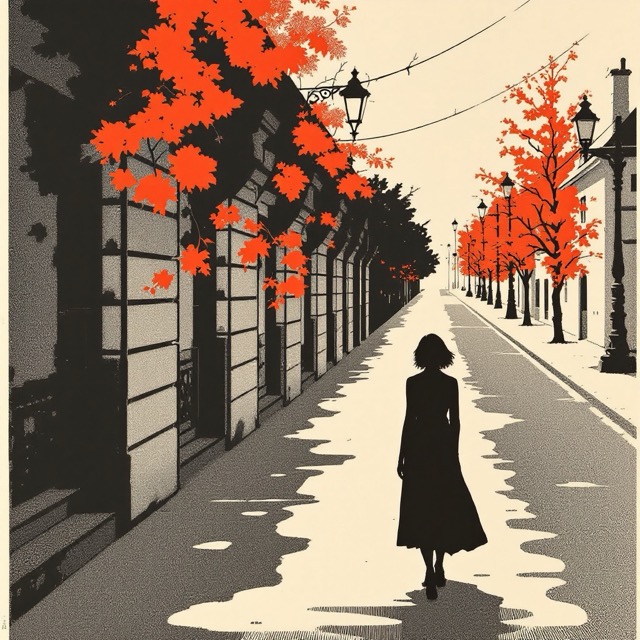 Inlaid Black OverprintAubrey Beardsley + Shepard Fairey + screen print on cream stock, where Beardsley's solid ink masses create hard-edged…
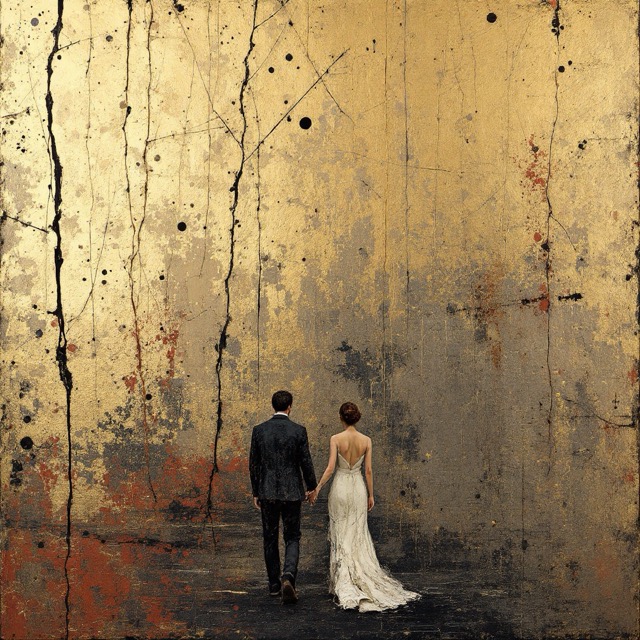 Oxblood Gilt PatinaAnselm Kiefer + Mark Rothko + gold leaf distressed over red bole, where Kiefer's encrusted, scraped surfaces create…
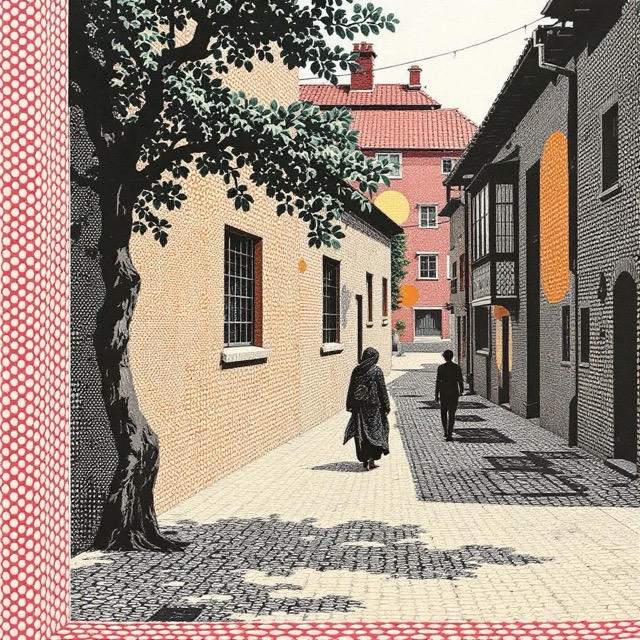 Tick-Woven Cardboard InkJangarh Singh Shyam + Anni Albers + Belomorkanal papirosy printing, where Shyam's dot-and-dash line infill creates…
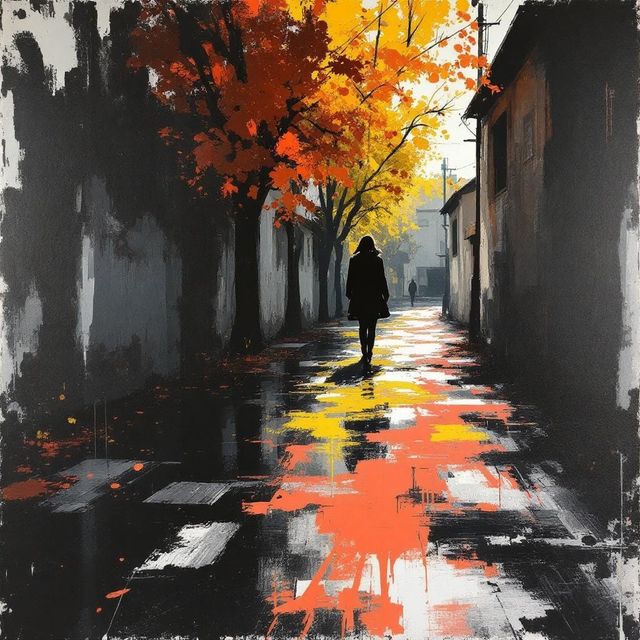 SqueegeeGerhard Richter + Franz Kline, where Richter's squeegee technique forces explosive paint bleeding that overrides clean…
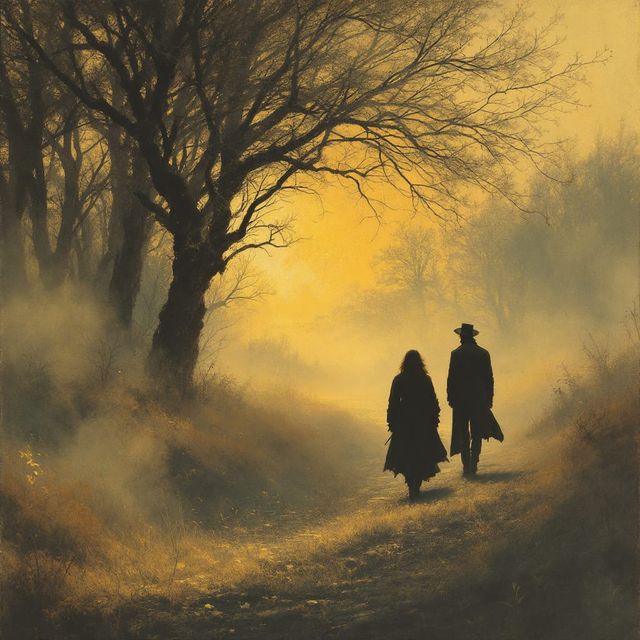 Engraved Postcard HazeGustave Doré + Joseph Mallord William Turner + 1950s linen-texture postcard printing, where Doré's engraved crosshatch…
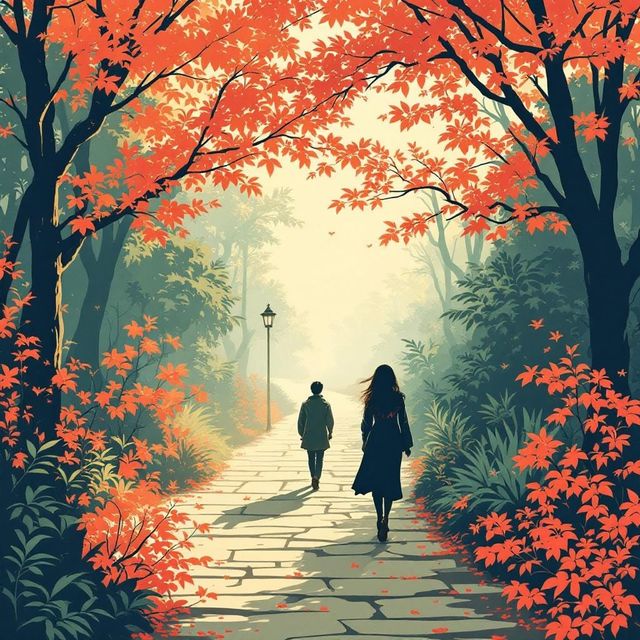 GraphicPoetryIn style of Katsushika Hokusai + Patrick Nagel, where Hokusai's bold woodblock simplification and decorative nature…